
About the Curator
Raised in her grandfather's philosophy of intentional spaces. Now curating field notes on architectural silence, restraint, and places worth staying in.
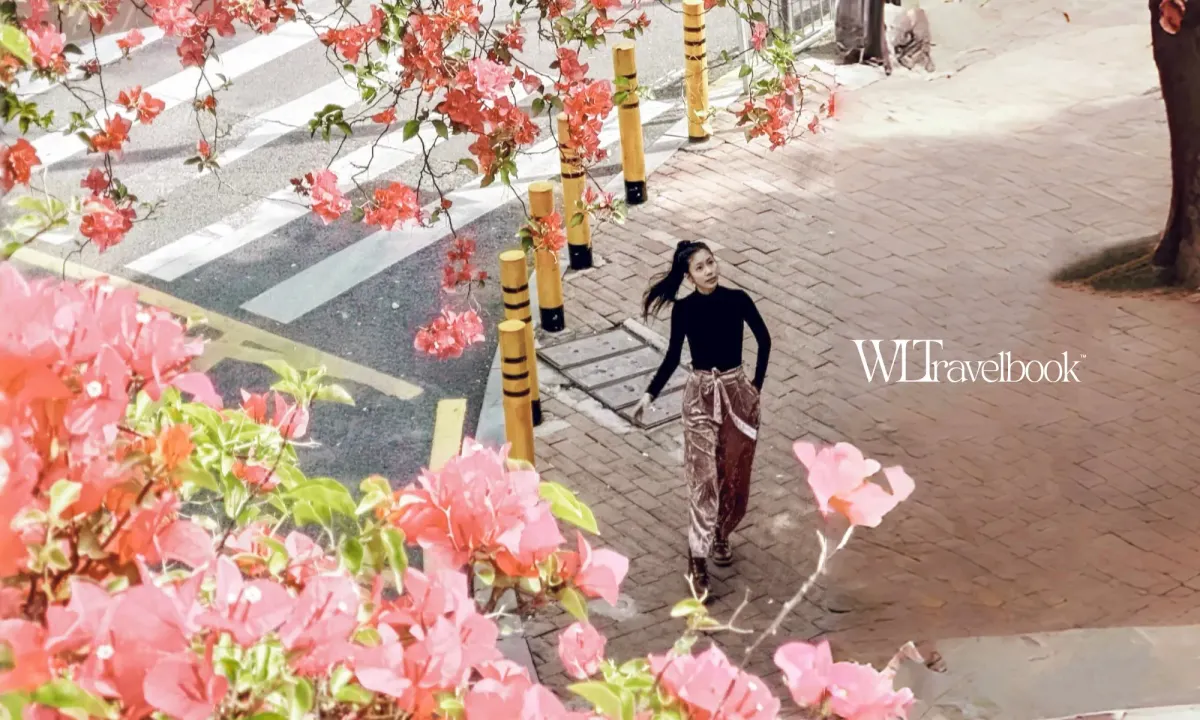
WLTravelbook exists because some people notice what others miss.
Childhood in Translation
She grew up on a small island, Pangkor Island in Malaysia, raised within her grandfather's philosophy of intentional spaces—a bookshop, a boutique sanctuary, a gathering place designed around the principle that restraint creates presence. While most children learn hospitality from formal training, she learned it from watching: how a small, deliberate space becomes a refuge; how service as restraint differs entirely from service as performance.
But the island was only the beginning. Her education scattered across cultures—different countries, different systems, different ways of seeing—each shift forcing a recalibration of how to read a space, a community, a ritual. This early immersion in cultural translation became permanent. She doesn't visit places; she decodes them.
The Sensitivity as Method
For as long as she can remember, she has been sensitive to environment. Not emotionally fragile—sensorily precise. She notices what altitude does to the nervous system. What specific light does to skin barrier. What silence actually feels like in the body. What a material choice communicates about a space's philosophy.
This sensitivity could have been a liability. Instead, it became the editorial lens.
The Travel as Research
Solo travel began young and became obsessive—not the accumulation of Instagram locations, but the methodical study of how different places organize themselves. Japan repeatedly. Taiwan repeatedly. Different seasons, different approaches, always the same question: What does this space teach about living well?
Later came couple travel, family travel, multigenerational travel—each mode reveals different truths about a place. A hotel behaves differently when you're alone than when you're protecting your parents. A ritual means something entirely different when shared versus solitary.
Every trip was research. Every observation was data. The question was never "Did I enjoy this?" but "What did this place do to my nervous system? What did I learn about restraint? About intention? About the invisible architecture that makes a space work?"
Why This Matters
Most travel writing is about accumulation: how many countries, how many rooms, how many experiences can you stack into a narrative. WLTravelbook is about the opposite.
It's about noticing when a property has spent millions on subtraction instead of display. It's about understanding that the most sophisticated hospitality is the kind you almost don't notice. It's about recognizing that cultural preservation isn't decoration—it's the actual foundation of a place's value.
She didn't create WLTravelbook to tell you where to go. She created it to teach you how to see when you arrive.
What You'll Find Here
- Field Notes — Short-form observations on sensory travel, spatial design, and what makes a place worth staying in.
- Dispatches — Long-form essays that examine hospitality, restraint, cultural preservation, and the link between architectural silence and the nervous system.
- The Archive — Curated resources, protocols, and deeper dives into the properties and philosophies featured throughout WLTravelbook.
The invitation is simple: arrive as an observer. Leave understanding something about yourself.